
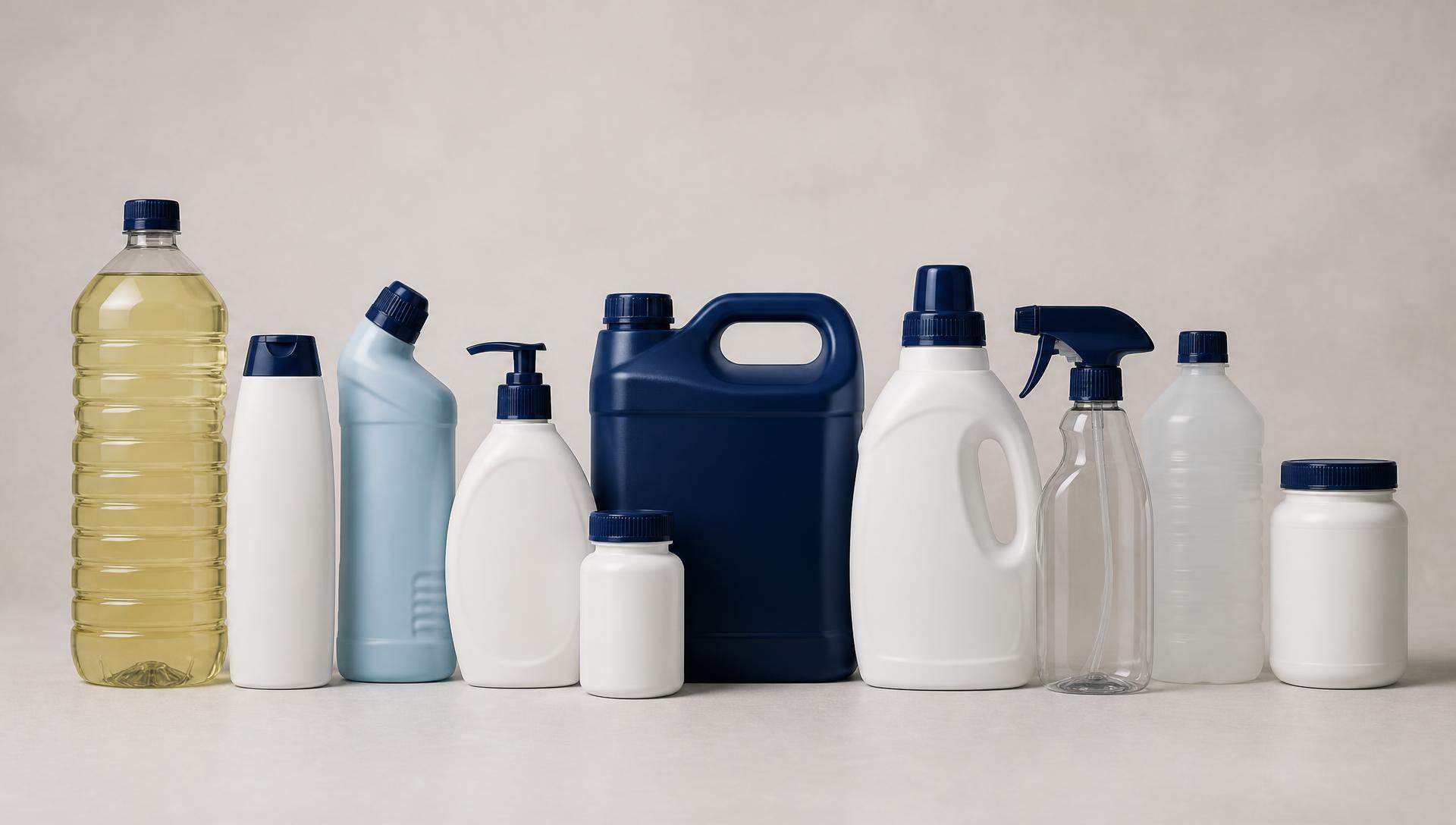
Screw caps, spout caps, flip-top, tamper-evident and induction-seal closures — what each type is for and where it fails.
Screw caps
The default closure for most rigid packs. Sealing comes from thread engagement plus a liner or sealing land. Reliable and cheap per unit, but sensitive to neck finish variation and application torque.
Spout caps
Used where controlled pouring matters — edible oil, ghee, lubricants and agrochemicals. A spout adds pour control and reduces glugging on larger packs, at the cost of a more complex tool and an extra assembly step.
Flip-top and dispensing closures
Single-hand operation for household and personal care packs. The hinge is the critical feature: hinge life is a resin and geometry decision, not a finishing one.
Tamper-evident and induction-seal formats
A tamper band gives visible evidence of opening; an induction liner adds a hermetic seal for products sensitive to moisture or leakage in transit. Many food and chemical programmes now specify both.
Choosing between them
Work backwards from the product, the pack size and the filling line. Viscosity and pour behaviour point to spout or screw; shelf and compliance requirements decide tamper evidence.